


Idrak Mansina is an immersive enviroment that redifnes Arabic language learning as a sensory and interactive experience-transforming language into something felt, explored, and shared.

Problem Statment
The excessive use of digital devices in the modern era, has created lasting social and cognitive impacts.
Problem impacts




Decline of
Classical Arabic
Constant exposure to foreign content
Weakend
Social
Connection


Target Audiance
Non-Native
Educational instituations
Families


Language as Experience
Language is not only spoken, but experienced through shared moments and interaction.
Digital Conditioning
Constant digital exposure reshapes attention, behavior, and the way we think.

Concept
In Arabic, Diacritics Shape the mouth, sound, and the meaning of a word.
Idrak Mansina transforms these linguistic movement into spatial experiences, allowing users to feel Arabic through gathering, exploration, reflection, and stillness.
Damma
-
Gathering
-
Warmth
-
Social
-
Energy
Fatha
-
Expression
Activation
Openness
Flow
Kasra
-
Reflection
Focus
Grounding
Intimacy
Sukuun
-
Stillness
Pause
Solitude
Silence


Arabic on the Frontlines of Technology
his project responds to the urgent need to prioritize Arabic in technology, recognizing that the language’s future depends on its active presence, development, and continuity within digital culture and innovation.
No nation can rise unless it mobilizes its energies, discourse, aspirations, determination, and tools. A true civilizational rise cannot endure without collective will and the sustained self-development of the Arabic language.Tit
H.H. Sheikha Moza bint Nasser, Web Summit Qatar 2026, Doha, 2 Feb 2026.
Site Location
Located in Qatar, within the heart of Doha in Msheireb, the project is positioned in M7, embedded within a network of cultural and public landmarks.


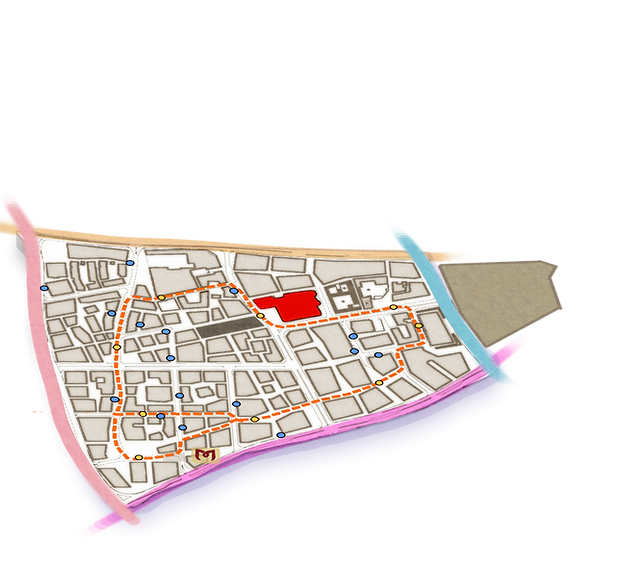
Site Accessibility & Connectivity
Parking
Site
Tram Line
Main Road Connecting lines
Heritage
Tram stops
Metro stations
Wind Direction
Environment Analysis
Sun path
Strategic Site Positioning
the site mediate betweem contemporary arcitivty and historical context through its position within M7


Cultural hub supporting creative programs and contemporary expreinces
Heritage context enchoring cultural continuity
Dynamic public realm activating interaction
Baraha Msherib
M7
Heritage Sites
Project Scope within Existing Building

The selected area measures approximately 1,772 m² and was chosen for its suitability to support the project’s program and spatial concept.

Site Access Diagram
Accessibility ramps
Emergency Exits
Main Entrance
Pedestrian Pathway


Project Experience
Inside, the project is experienced through a series of connected zones shaped by program, movement, and atmosphere.
Experiential Journey Diagram
Start
Unfamiliarity
Anticipation
Curiosity
Reflection
Immersion
Connection
Afterglow
_edited.png)
Fattha
_edited.png)
Kasra


Damma
Sukun
Diacritics / Tashkeel -Inspired Form
Aleph’s form is inspired by the soft, flowing geometry of Arabic diacritics. Its rounded and playful design translates the movement and fluidity of the harakat into a friendly companion object.


Aleph: The Interactive Guide
Aleph is the project’s companion device, designed to guide users through the space and support their experience as they move between its different zones. More than a functional object, it acts as a symbolic extension of the concept, connecting interaction, learning, and spatial navigation.
_edited.png)
Handheld and Wrist-Worn Use
Aleph is designed to be both handheld and worn on the wrist, allowing ease of use and continuous interaction throughout the spatial journey.
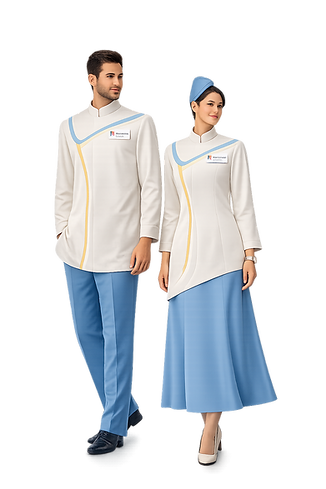
Staff Uniform Concept
The uniform reflects the project’s identity through soft lines and a muted Sukuun tone that conveys calmness and approachability.
Temporal Zoning

The project is divided into three temporal zones: the workshop and gathering area as the past, the entrance hall as the present, and the immersive active zone as the future.
Future — Immersive Active Zone
Present — Main Entrance Hall
Past — Workshop & Gathering Zone
Access Zoning

The project is organized by levels of access, distinguishing public areas, employee-only spaces, and zones that require permission.
Public Access
Permission Required
Employees Only
Present - Main Entrance Area


The present zone connects the workshop area to the immersive experience through reception, waiting, lockers, and the gift shop.
Main Entrance Hall
The seating arrangement reflects Sukuun and Damma through outward-facing and gathering-oriented positions.
Waiting Area


The gift shop extends the concept through merchandise that creates a lasting connection to the experience.
Gift Shop
Future - immersive learning area

_edited_edited.png)
_edited_edited.png)
_edited_edited.png)
_edited_edited.png)

_edited.png)
Embodied Tashkeel
In this zone, the concept becomes interactive, allowing the user to experience the Thashkeel through movement and spatial engagement.
Color-Coded Zoning


Damma - social zone
Kasra - Reflective Zone
Transitional Areas

Sukuun — Calm Zone

Fatha — Active Zone
_edited.png)
Experiential Sequence
The journey unfolds through changing moments of activity, pause, reflection, and connection.

_edited_edited.png)

_edited_edited.png)
_edited.png)
Sukuun Zone
This zone translates the tashkeel of Sukuun through quietness, stillness, and individual experience. It encourages pause, reflection, and personal preparation before moving deeper into the journey.
Sukun - calm zone

Individual Immersive Pods
These pods create a more private and focused experience between the user and the content. They support self-guided learning, quiet interaction, and individual immersion
Fathe / Kasra Zone

Fatha & Kasra Contrast
Fatha and Kasra are paired to create contrast through level, posture, and interaction. Fatha feels open and elevated, while Kasra feels grounded and focused.
_edited.png)
_edited_edited.png)
_edited.png)
Kasra
Grounded, quiet, and focused.
Fatha
Open, elevated, and active.
_edited_edited.png)

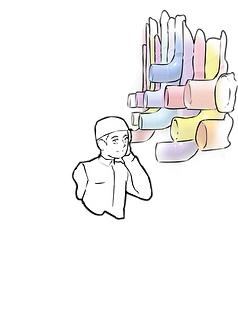


Fatha Area
Kasra
Kasra Screen Nooks
Acoustic Pipes
People in past-kasra area speaks
Acoustic Pipes
People in future fatha area listens
Fatha Interactive Screens
Sectional Contrast
The section highlights the spatial contrast between Fatha and Kasra, with different levels shape different experiences.
Damma - Socializing zone


_edited.png)
Damma Zone
This zone translates the tashkeel of Sukuun through quietness, stillness, and individual experience. It encourages pause, reflection, and personal preparation before moving deeper into the journey.
Collective Interaction
The activities in this area are designed for more than one user, encouraging participation, exchange, and a sense of connection.

Farwell Area
The final zone offers the user a last interaction with Aleph before exiting.

Sanitization Process
Aleph is returned through the wall, collected by staff, and taken to the sanitization room for reuse.

Farwell Area
Located beyond the entrance sequence, this area supports quieter learning and small-group interaction. It includes a reception point, semi-private meeting rooms, and reading pods that create a more focused and comfortable environment.


Sectional View
The section highlights how the workshop area is organized through connected learning and meeting spaces.


Morning Light
Evening Light
Lighting Conditions
These views show how changing light conditions shape the atmosphere of the workshop area.
Create Your First Project
Start adding your projects to your portfolio. Click on "Manage Projects" to get started
Project 01
